
From Failure to Stability: Three Case Studies on Improving the Reliability of Threaded Fasteners
In the realm of mechanical equipment, threaded fasteners may be small, but they bear the heavy responsibility of ensuring “connection equals safety.” According to statistics, approximately 24% of industrial equipment failures globally are attributed to loose fasteners or connection failures. Enhancing their stability is a persistent challenge for engineers. This article explores methods to improve the reliability of threaded connections by examining three real-world cases of resolved failures.
Case One: Fractured Bolts in Road Tests – The Overlooked “Assembly Torque”

During road testing, an OEM discovered fatigue fractures in the eccentric bolts connecting the upper control arm to the brake assembly. Macroscopic fracture analysis and metallurgical examination yielded a surprising conclusion: the bolt material (SCM435 steel) and its heat treatment met all standards. The root cause was traced to the assembly process—specifically, the bolts were not tightened to the specified torque during wheel alignment, leading to loosening. Under cyclic loads, stress concentration at the thread root ultimately caused fatigue failure.
The Solution: The team did not simply opt for higher-strength bolts. Instead, they focused on “process control.” This involved optimizing the assembly procedure by introducing high-precision torque control and residual torque monitoring to ensure each bolt achieved the required design preload. Concurrently, the bolt design was improved by enlarging the transition radius to reduce stress concentration. This case reinforces a classic principle: Even the best fastener is a potential failure point without precise assembly preload.
Case Two: Loose Nuts on a Turbocharger – The “Creep Nightmare” at High Temperatures
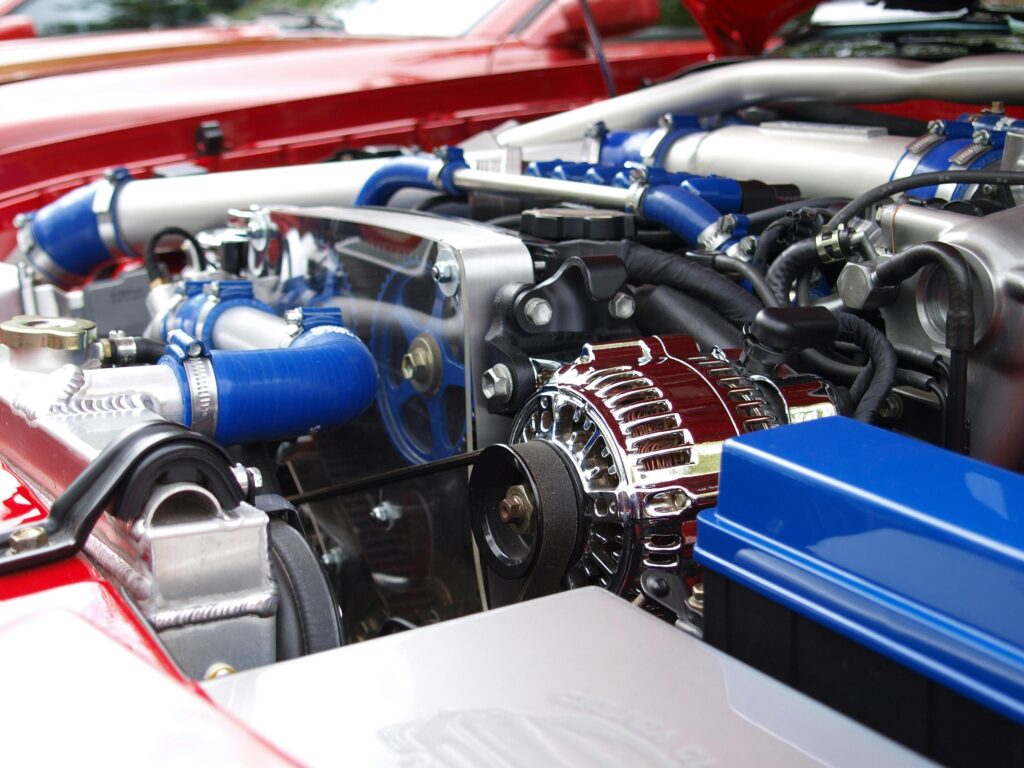
In the connection between an automotive engine’s turbocharger and three-way catalytic converter, a clamp assembly experienced nut loosening after 70,000 km of road testing. Notably, the assembly already utilized “Stover” nuts, renowned for their anti-loosening capabilities. Analysis revealed that at operating temperatures reaching 475°C, the bolts underwent significant creep relaxation, becoming permanently elongated by 1.193 mm. As the preload diminished, even the specialized thread design could not sustain sufficient frictional force, ultimately leading to loosening.
The Solution: This case highlights the complexity of ensuring stability under extreme conditions. Relying solely on thread-locking geometry is insufficient; the time-dependent failure of materials must be considered. The corrective actions included: selecting superalloys with superior creep resistance, precisely calculating thermal expansion coefficients for compatibility, and supplementing with other anti-loosening methods like fine-pitch threads. This case serves as a reminder that improving fastener stability requires shifting from “static considerations” to “full lifecycle dynamic assessments.”
Case Three: Challenges in Wind Power Equipment – Eliminating “Micro-Movement”

In wind turbine generators, fasteners endure intense vibrations and random cyclic loads. Conventional threads have inherent weaknesses under severe vibration: the load concentrates on the first one or two threads, and continuous micro-movement gradually erodes the preload. For large fasteners (up to M72) operating in corrosive offshore environments, traditional anti-loosening methods proved inadequate.
The Solution: Shanghai Underberg Precision Fastener introduced the Stover® anti-loosening technology system. The core principle involves modifying the thread’s load-bearing geometry. A 30-degree wedge ramp at the nut’s thread root forces the bolt thread crest to contact this inclined surface, fundamentally eliminating thread clearance. Test data showed normal pressure increased by 1.74 times compared to standard threads, and anti-loosening frictional force increased threefold. In the Shanghai Maglev Train project, nuts utilizing this technology showed no loosening or detachment after 90 days of trial operation, proving their stability under extreme vibration.
Conclusion
These three cases illustrate failure mechanisms related to assembly execution, material creep, and structural design, respectively. Improving the stability of threaded fasteners cannot rely on a single “magic solution” but requires a systematic approach:
Strict Assembly Control: Ensure precise and consistent preload, rejecting imprecise practices.
Consider Operating Conditions: Select creep-resistant materials and verify thermal compatibility for environments involving high temperatures and vibration.
Innovate Structures: Adopt advanced thread technologies (like wedge-ramp profiles) to distribute stress and eliminate clearances.
Implement Smart Monitoring: Utilize digital tightening systems or residual torque sampling to make connection status “visible.”
Only by learning from each failure case and driving improvements through both technology and management can these small fasteners truly become the most reliable “guardians” of equipment safety.
Great content! Keep up the good work!